
Professional Sanicompact GB Engineer in Ireland
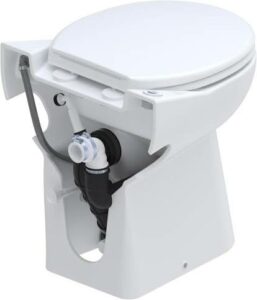
The Sanicompact GB is a compact ceramic WC with an integrated Saniflo macerator. It combines the toilet bowl, flushing system and wastewater pump in one appliance, so a separate cistern and external macerator are not required.
This all-in-one design can provide a practical solution for a small cloakroom, en-suite or additional domestic toilet where conventional gravity drainage is not available.
The current SFA Saniflo product is officially named Sanicompact. We retain the familiar Sanicompact GB name on this page because many existing Irish installations, customers and replacement enquiries still use that description.
The unit connects directly to the domestic water supply and uses an automatic push-button flush. In addition, one 40 mm side inlet can receive wastewater from a suitable wash basin.
Because the macerator sits inside the ceramic WC, servicing and diagnosis require knowledge of both the flushing system and the internal pumping components.
At Saniflo.Irish, we have serviced, repaired and replaced Sanicompact systems since 2015.
As an Approved Saniflo Engineer authorised by SFA Saniflo, we specialise exclusively in Saniflo products.
Our experience helps us identify internal component faults, water-supply problems, discharge restrictions and installation issues. In addition, we use genuine Saniflo replacement parts where appropriate.
Whether your Sanicompact GB needs preventative servicing, professional repair or complete replacement, we can help.
Our approach remains straightforward: diagnose accurately, repair first where economical and recommend replacement only when it provides better long-term value.
Common Sanicompact GB Problems
The Sanicompact GB operates differently from a conventional gravity toilet. Each flush depends on the incoming water supply, flush control, integrated cutter and pump, non-return valve and discharge pipework working together.
Therefore, a symptom at the toilet does not always mean that the motor has failed. Low dynamic water pressure, a restricted water inlet, a faulty control component or unsuitable discharge pipework can all affect performance.
Limescale also develops gradually in hard-water areas. Deposits may affect the flushing system, internal waterways and moving components. As a result, the unit may become noisier, take longer to complete its cycle or flush less effectively.
Incorrect use remains another common cause of avoidable faults. The unit should receive normal toilet waste and standard toilet paper only.
Wet wipes, sanitary products, paper towels, cotton products, dental floss and other non-flushable materials may obstruct the cutter or restrict the internal pumping chamber.
Installation quality also affects long-term reliability. Unsupported discharge pipework, unnecessary bends, incorrect falls, inaccessible connections or poor electrical arrangements can create recurring problems.
Common Symptoms We Repair
Some of the most common Sanicompact GB symptoms include:
- Toilet does not flush
- Weak or incomplete flush
- Water remains in the bowl
- Unit runs continuously
- Pump does not start
- Motor hums but does not pump
- Slow waste removal
- Repeated or irregular operating cycles
- Unusual operating noise
- Water leaks around the toilet or connections
- Wash basin drains slowly where connected
- Wastewater backs up into the basin
- Unit trips the electrical supply
- Unpleasant odours
- Limescale build-up
Every repair starts with a complete diagnosis of the toilet, integrated macerator and surrounding installation.
Common Faults We Repair
Customers often contact us after searching for one of the following Sanicompact GB problems:
- Sanicompact GB not flushing
- Sanicompact GB not pumping
- Sanicompact GB keeps running
- Sanicompact GB blocked
- Sanicompact GB leaking
- Sanicompact GB making a loud noise
- Sanicompact GB not switching off
- Sanicompact GB water inlet fault
- Sanicompact GB flush button not working
- Sanicompact GB motor failure
- Sanicompact GB electrical fault
- Sanicompact GB tripping the fuse
- Sanicompact GB basin connection backing up
- Integrated toilet macerator not working
Many customers assume that an internal macerator fault automatically means replacing the complete ceramic WC.
However, serviceable components can often be repaired or replaced individually when the ceramic body and main assembly remain in suitable condition.
First, we identify the exact cause. Then, we explain the most practical repair option and any parts required.
From Our Experience
The Sanicompact GB can provide dependable service when the water supply, discharge pipework and electrical connection all meet the product requirements.
From our experience, many recurring problems begin outside the ceramic toilet. Low dynamic water pressure can produce an incomplete flush, while restrictive discharge pipework can increase pumping time and place unnecessary strain on the motor.
Limescale is another important factor in Irish installations. Gradual deposits may alter water flow and affect internal components long before the unit stops completely.
Customers also sometimes use the Sanicompact like a conventional gravity toilet and flush unsuitable materials. Unfortunately, the integrated cutter and pump cannot reliably process wipes, sanitary products or other non-biodegradable items.
Early inspection usually provides more options. A professional service, cleaning procedure or replacement of a worn component may restore normal operation before a larger failure develops.
We inspect the complete installation rather than focusing only on the motor. This includes the incoming water supply, flush operation, basin connection where fitted, discharge route, electrical supply and future service access.
Our approach remains the same for every Saniflo product: repair first and replace only when replacement offers better long-term value.
Annual Sanicompact GB Servicing
Regular professional servicing helps maintain reliable flushing and pumping performance. It can also identify developing problems before they cause an unexpected breakdown.
The most suitable maintenance interval depends on frequency of use, water hardness, installation condition and the operating history of the unit.
What We Check During a Service
During a professional service, we inspect the visible condition of the ceramic WC, flush control, water connection and accessible internal components.
We also assess the motor, cutter system, control components, non-return valve, seals and electrical connections where access allows.
Next, we check for limescale, toilet-paper accumulation, foreign materials and other deposits that may affect operation.
Where a wash basin is connected, we inspect its inlet arrangement and test automatic activation from incoming grey water.
We then test the complete operating cycle. This confirms that the toilet fills correctly, flushes, macerates, pumps and stops as intended.
Finally, we review the accessible discharge pipework, water-supply isolation and service access before explaining any recommended repair or preventative work.
Limescale and Preventative Cleaning
Hard water can affect both the flushing and pumping systems. Therefore, controlling deposits forms an important part of long-term maintenance.
For a higher level of preventative care, we offer optional Deep Steam Cleaning for an additional €60 where the procedure is suitable for the unit and installation.
High-temperature steam can help remove bacteria, biofilm, organic residue, limescale and unpleasant odours from suitable accessible areas without relying on harsh chemicals.
Sanicompact GB Repairs
Most Sanicompact GB faults should be diagnosed before replacement is considered.
First, we confirm the reported symptoms and test the flushing and pumping cycle. Then, we inspect the water supply, internal mechanism, electrical operation and discharge system.
Depending on the exact model generation and condition, repair may involve the flush control, water inlet components, motor, cutter assembly, non-return valve, seals, electrical controls or other service parts.
Where appropriate, we use genuine Saniflo replacement parts and follow the correct service procedure for the installed version.
Because the pump forms part of the ceramic WC, correct dismantling and reassembly are important. Poor handling can damage seals, connections or the ceramic appliance.
One common misconception is that every integrated toilet fault requires a complete replacement. In reality, many problems involve a service component while the main ceramic assembly remains usable.
Professional diagnosis can therefore provide a more economical and less disruptive solution.
After completing a repair, we test the water inlet, flush cycle, maceration, pumping performance, shut-off and connected wash-basin operation where fitted.
Finally, we check for leaks and confirm that the unit returns to normal standby operation.
Sanicompact GB Replacement
Repair usually provides the most economical solution when the ceramic WC and main assembly remain in good condition.
However, replacement may offer better long-term value when the unit has extensive internal wear, repeated major faults, damaged ceramic, obsolete parts or installation problems that make further repair uneconomical.
The current SFA Saniflo product is officially named Sanicompact. Before recommending replacement, we confirm the exact existing model, dimensions, basin connection, water-supply arrangement, discharge route and electrical requirements.
Our replacement service includes removing the existing integrated toilet and installing a suitable genuine SFA Saniflo replacement.
We reconnect the 32 mm discharge, incoming water supply, optional basin inlet and electrical service as required.
In addition, we inspect the surrounding installation for low water pressure, restrictive pipework, inaccessible isolation points and inadequate service space.
Correcting these issues during replacement can improve reliability and simplify future maintenance.
Finally, we test the full and reduced flush functions, automatic basin activation where connected, pumping performance and leak-free operation.
Our online Quick Quote calculator provides an estimated replacement price for a standard installation. Where additional work is required, we explain the reason and cost before proceeding.
Ideal Applications for the Sanicompact GB
The Sanicompact GB is designed for domestic applications where a compact WC with an integrated macerator provides a practical alternative to conventional gravity drainage.
Because it does not require a separate cistern or external macerator, it can save valuable space in small rooms.
Typical applications include:
- Domestic cloakrooms
- Small en-suite toilets
- Loft conversions
- Basement toilets
- Garage conversions
- Home extensions
- Garden rooms
- Home offices
- Guest toilets
- Holiday homes
- Compact apartment renovations
- Accessible domestic layouts where the specification is suitable
The optional wash-basin inlet can create a complete small cloakroom with only one pumped discharge system.
However, the Sanicompact is part of the domestic range. It should not be selected for busy public or commercial washrooms without direct confirmation that the proposed duty is suitable.
Before recommending this model, we consider available space, expected use, dynamic water pressure, discharge height, pipework route and future service access.
Correct product selection and professional installation provide the strongest foundation for dependable operation.
You can also explore our complete Saniflo Models guide to compare other macerators, grey-water pumps and lifting stations.
Technical Specifications
The current Sanicompact is a compact ceramic WC with a built-in macerator, automatic push-button flush and optional inlet for one wash basin.
It connects directly to the domestic water supply and does not require a conventional cistern.
Official Technical Specifications
- Product type: ceramic WC with integrated macerator
- Suitable range: domestic
- Automatic push-button flush
- Cisternless design
- Soft-close toilet seat
- Flush volume: 1.8 / 3 litres
- Number of optional grey-water inlets: 1
- External wash-basin inlet diameter: 40 mm
- External discharge diameter: 32 mm
- Recommended maximum vertical discharge: 3 metres
- Maximum horizontal discharge length: 30 metres
- Maximum incoming water temperature: 35°C
- Minimum required dynamic incoming water pressure: 1.7 bar
- Motor power: 550 W
- Power supply: 220–240 V
- Frequency: 50–60 Hz
- Electrical class: Class I
- Protection rating: IP44
- Noise level: 51 dB(A)
- Impeller type: multi-cutter disc
- Gross product weight: approximately 25 kg
- Genuine SFA Saniflo product
- Designed, manufactured and tested in France
For current manufacturer information, view the official Sanicompact product page on the SFA Saniflo Ireland website.
Our Professional Recommendation
The current Sanicompact uses a fixed 32 mm external discharge connection. Therefore, we recommend maintaining correctly installed 32 mm discharge pipework throughout the route wherever practical.
The pipework should remain adequately supported and follow the manufacturer’s installation requirements. It should also avoid unnecessary bends, restrictions and unsuitable changes in direction.
Water Supply and Dynamic Pressure
The Sanicompact relies on a direct domestic water connection rather than a cistern.
Consequently, adequate dynamic water pressure is essential. The current manufacturer specification requires at least 1.7 bar while water is flowing, not merely a higher static reading when no outlet is open.
Low dynamic pressure can reduce flush volume and make a healthy pump appear faulty. For this reason, the water supply should be checked before internal components are replaced.
Discharge Route and Pipe Support
Keep the 32 mm discharge route as direct as practical and use appropriate sweeping changes of direction where required.
Correct support helps prevent movement, vibration and low points where waste can collect.
The discharge should rise and run in accordance with the installation instructions so that the unit does not repeatedly pump against avoidable resistance.
Service Access and Electrical Safety
Leave adequate access around the toilet for future maintenance. The water isolation point, electrical connection and discharge joint should remain reachable without destructive work.
The electrical supply must comply with applicable regulations and remain protected appropriately for a bathroom environment.
These recommendations reflect our practical experience servicing Saniflo systems since 2015.
Typical Lifespan of a Sanicompact GB
A professionally installed and regularly maintained Sanicompact GB can provide many years of dependable domestic service.
However, there is no single lifespan that applies to every installation. Actual service life depends on frequency of use, water hardness, incoming water pressure, discharge conditions, installation quality and maintenance history.
The ceramic WC may remain in good condition for longer than some internal service components.
Over time, the motor, cutter system, seals, non-return valve, water inlet components, flush controls and electrical parts may experience normal wear.
Therefore, the failure of one component does not automatically mean that the complete integrated toilet requires replacement.
Limescale can also reduce efficiency gradually. In hard-water areas, deposits may affect water flow, increase operating noise and place additional strain on the flushing and pumping systems.
Incorrect use can shorten service life significantly. Wet wipes, sanitary products and other unsuitable materials may obstruct or damage internal components.
Where practical, worn service parts can often be repaired or replaced individually.
Consequently, early diagnosis and preventative maintenance may extend the useful life of the installation while avoiding unnecessary replacement.
From our experience, correct water pressure, suitable 32 mm discharge pipework, normal toilet use and regular professional inspection provide the strongest foundation for reliable long-term operation.
How to Extend the Life of Your Sanicompact GB
Long-term reliability depends on correct installation, adequate water pressure, suitable everyday use and preventative maintenance.
Because the toilet and macerator form one appliance, a problem with either the flushing or pumping system can affect the complete operating cycle.
Use the Toilet Correctly
Only normal toilet waste and standard toilet paper should enter the WC.
To help protect the cutter and pump, never flush:
- Wet wipes, including products labelled as flushable
- Sanitary towels or tampons
- Nappies
- Cotton buds or cotton pads
- Paper towels or cleaning cloths
- Dental floss
- Condoms
- Cat litter
- Food waste
- Cooking grease or fats
- Building materials
- Any unsuitable non-biodegradable material
Respond to Early Warning Signs
Weak flushing, longer pumping cycles, unusual noise, repeated activation, slow basin drainage or water remaining in the bowl may indicate a developing problem.
Therefore, arrange an inspection before the unit stops completely. Early diagnosis can reduce secondary damage and provide more economical repair options.
Maintain Water Pressure and Service Access
Do not restrict the incoming water supply or conceal the isolation point behind permanent furniture.
Keep the electrical connection and discharge joint accessible. Clear service access can reduce labour time and disruption during future maintenance.
Control Limescale
Use only cleaning products and procedures suitable for Saniflo equipment. Avoid aggressive chemicals that may damage seals or internal components.
Regular professional inspection helps identify deposits before they reduce flushing and pumping performance.
Why Choose Saniflo.Irish?
An integrated macerating toilet requires specialist product knowledge because the water inlet, flushing system, cutter, pump and discharge arrangement work as one appliance.
At Saniflo.Irish, we specialise exclusively in Saniflo products.
As an Approved Saniflo Engineer authorised by SFA Saniflo, we have serviced, repaired and replaced Saniflo systems since 2015.
We inspect the complete installation rather than focusing only on the motor.
First, we confirm the symptoms and test the operating cycle. Then, we assess the water supply, flush function, integrated macerator, optional wash-basin inlet, discharge pipework, electrical supply and service access.
This approach helps us distinguish an internal component fault from low water pressure, a blocked basin waste or restrictive discharge pipework.
Where repair is economical, we recommend repair first and use genuine Saniflo replacement parts where appropriate.
Where replacement provides better long-term value, we explain the reasons and identify any installation improvements required.
Our priorities are accurate diagnosis, honest advice, transparent pricing and a dependable long-term solution.
Request Your Sanicompact GB Quote
Whether your Sanicompact GB needs preventative servicing, professional repair or complete replacement, we are ready to help.
Our online Quick Quote calculator provides an estimated price for many standard service and replacement enquiries.
Simply select the service, property type and area. Afterwards, complete your contact details and tell us more about the fault or installation.
Uploading clear photographs can help us identify the Sanicompact generation, basin connection, pipework arrangement and available service access before the visit.
If you are unsure whether repair or replacement is the better option, we can inspect the existing integrated toilet and provide honest advice based on its condition.
In many cases, professional servicing or replacement of a worn component can restore reliable operation without replacing the complete ceramic WC.
Our objective is simple: restore dependable flushing and wastewater removal while avoiding unnecessary work and expense.
Get Your Sanicompact GB Estimate
Sanicompact GB